
Commercial Interior Design in London
Mastering London’s planning and heritage complexities. We de-risk your commercial fit-out, delivering bespoke interiors without the bureaucratic friction.
When a tech startup moved into a converted Victorian warehouse in Shoreditch last year, they faced a problem many London businesses know too well: how do you fit modern office needs into a Grade II listed shell without losing what made the space special? That’s where commercial interior design becomes less about aesthetics and more about solving real London problems—heritage constraints, tight footprints, and the eternal challenge of natural light in dense urban settings.
T&V Architects specializes in commercial interior design in London, working with businesses that need more than just a pretty office. From navigating Change of Use applications to designing acoustic solutions for open-plan layouts, the practice handles the complex regulatory and spatial challenges that define working in the capital.

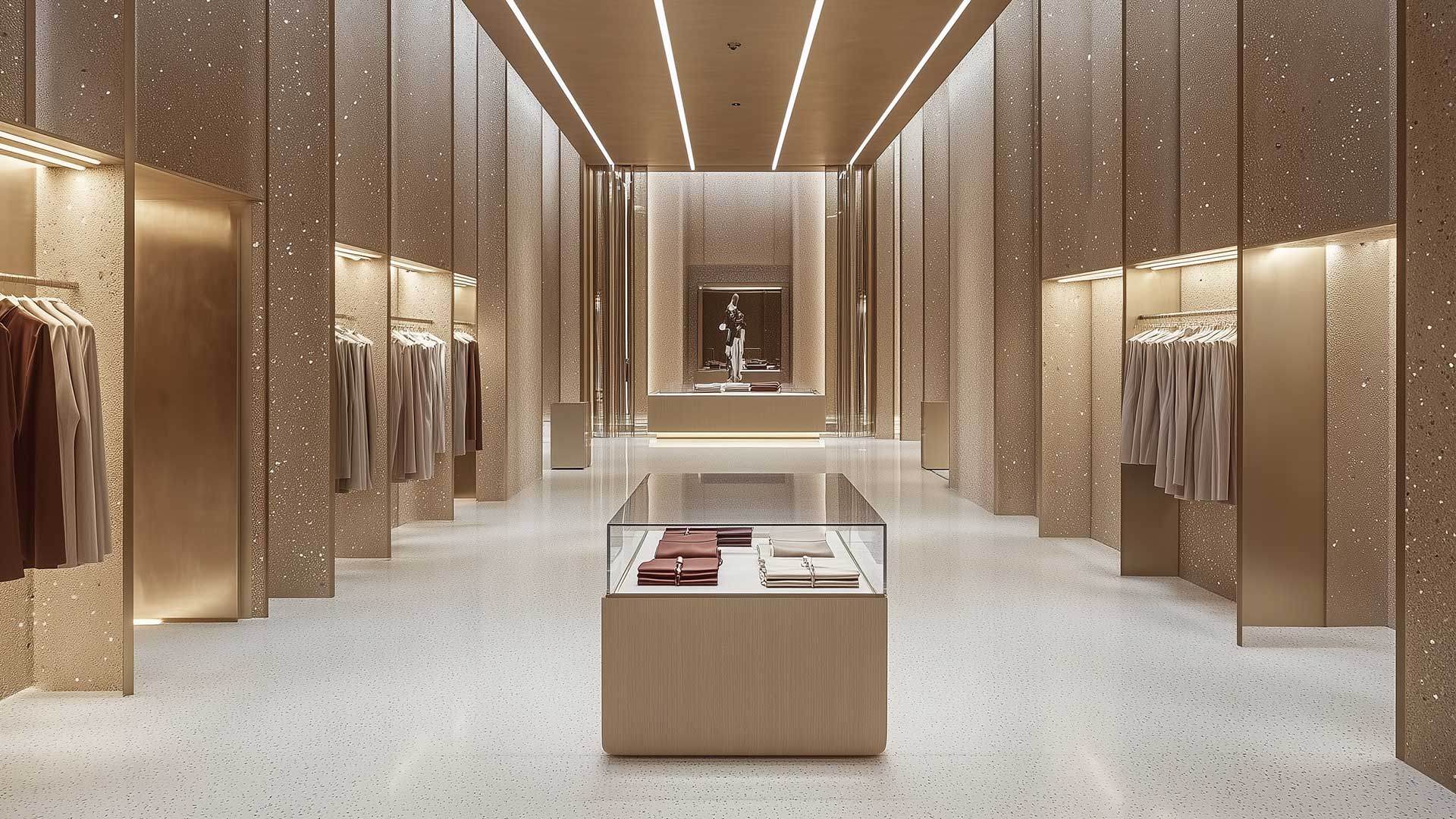
Strategic Planning: Navigating London’s Change of Use & Permitted Development
The recent Class E flexibility has opened opportunities across London, but it’s also created confusion. Converting a retail unit on Tottenham Court Road into a fitness studio, or transforming a bank branch in Canary Wharf into serviced offices—these projects require understanding both permitted development rights and when you’ll need full planning permission.
T&V Architects guides clients through the entire process, from initial feasibility assessments to liaising with local planning authorities. Many boroughs have Article 4 directions that remove certain permitted development rights, particularly in conservation areas like Marylebone or Greenwich. The firm knows which applications will sail through and which need careful strategy.
This commercial interior design London approach starts with regulatory clarity. Before any design work begins, the team maps out the planning pathway, identifies potential obstacles, and creates a timeline that accounts for consultation periods and potential appeals. This front-loaded planning saves months of delays and prevents costly redesigns.
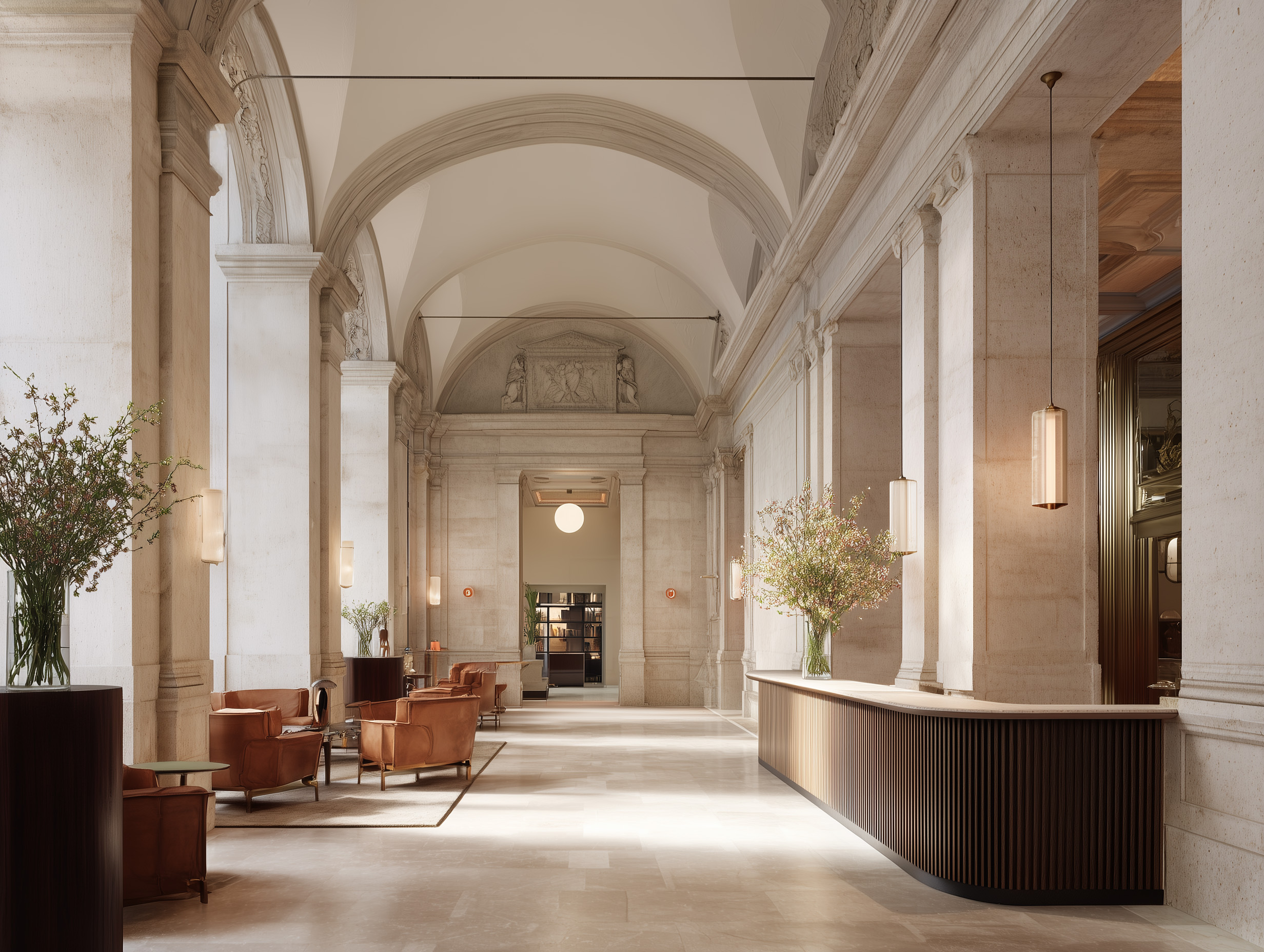
Heritage-First Interiors: Modernizing Grade I & II Listed Commercial Spaces
Listed buildings account for a significant portion of London’s commercial real estate, particularly in areas like the City, Westminster, and Camden. Installing air conditioning, upgrading electrical systems, or adding partition walls in these spaces requires Listed Building Consent—and that means designing solutions that respect historic fabric while delivering modern functionality.
The practice has worked on projects ranging from Georgian townhouses in Bloomsbury to Victorian warehouses in Bermondsey. The key is understanding what conservation officers prioritize: reversible interventions, matching materials, and preserving significant features. Sometimes this means routing services through existing voids; other times it’s about using period-appropriate detailing for new insertions.
For a legal firm in Lincoln’s Inn, the team designed a climate control system that used existing chimney flues and ornamental cornices to hide distribution, avoiding any damage to original plasterwork. The project took 18 months from concept to completion, but achieved full consent without compromise to either heritage or environmental performance.
Illuminated Design: Strategic Natural Lighting for Narrow & Subterranean Spaces
London’s commercial buildings often come with challenging floor plates—deep plans, north-facing aspects, or basement levels that rely entirely on artificial lighting. Poor daylighting affects productivity, increases energy costs, and makes spaces feel cramped regardless of their actual size.
This commercial interior design London practice uses several techniques to maximize natural light penetration. Lightwells and internal courtyards bring illumination deep into floor plates. High-performance glazing with low iron content and anti-reflective coatings transmits more visible light while managing solar gain. Light shelves and reflective ceiling planes bounce daylight further into interiors.
For below-grade spaces, the firm has installed mirror ducts that channel daylight from roof level to basement offices, supplemented by tunable LED systems that mimic natural circadian rhythms. These solutions aren’t just about brightness—they’re about creating spaces where people want to spend their working day, particularly in a city where many leases involve lower ground floor premises.
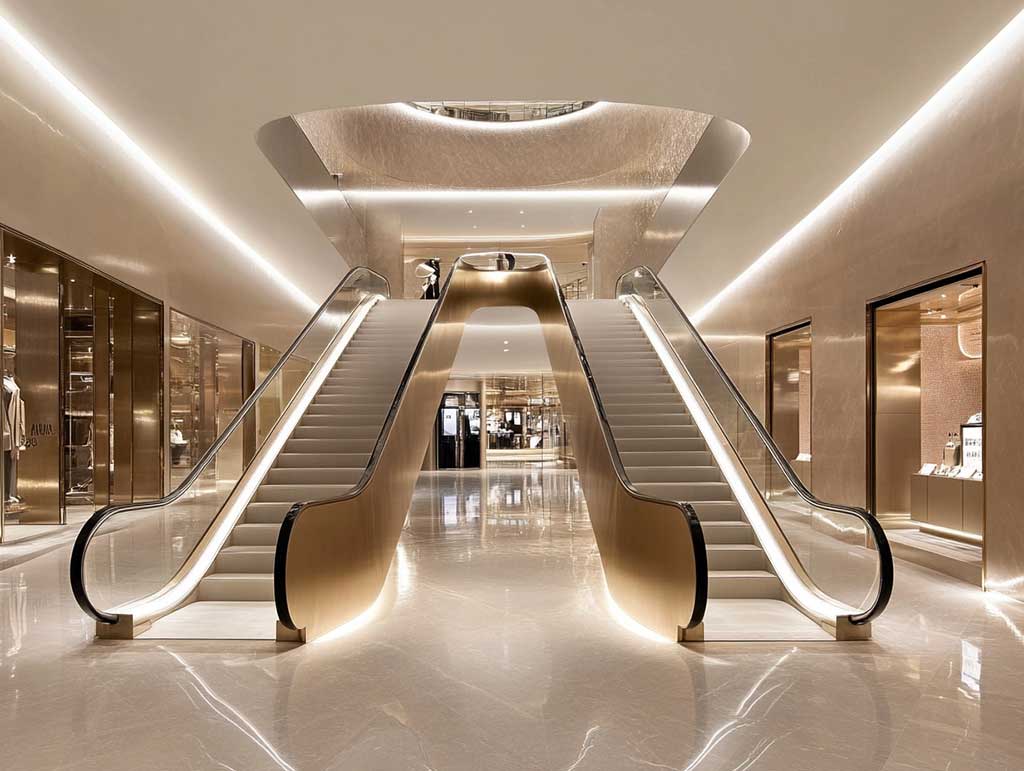
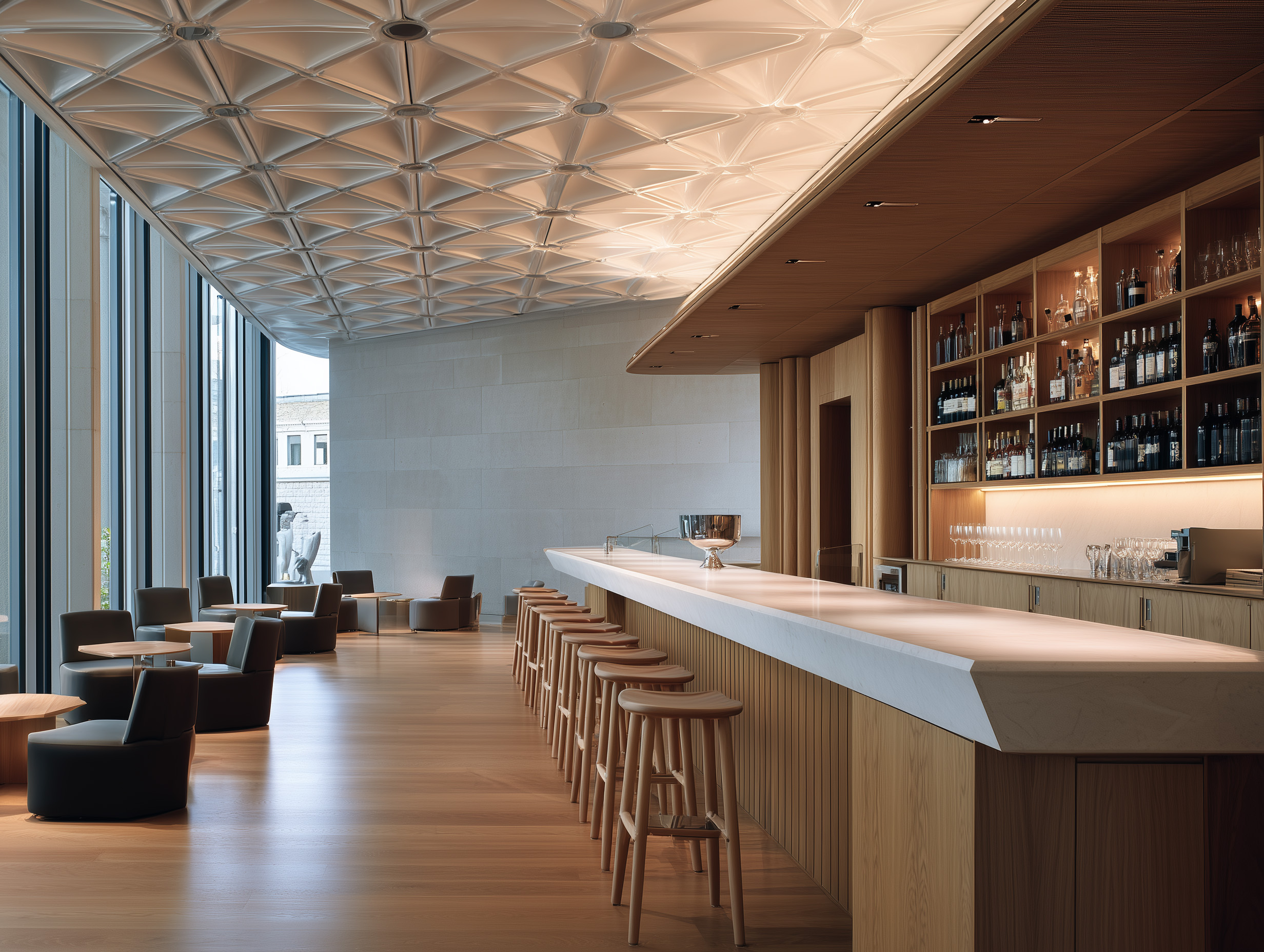
Soundscape Design: Solving the Acoustic Challenges of Open-Plan Offices
The shift toward collaborative workspaces has created acoustic nightmares across London offices. Sound carries differently in converted industrial lofts versus modern glass towers, and most businesses only discover their acoustic problems after fit-out is complete.
The approach here treats acoustics as a design element, not an afterthought. This means specifying ceiling-mounted baffles that double as visual interest, using textured wall treatments that absorb mid-frequency speech, and creating spatial zoning that separates focus areas from collaborative zones. Material selection plays a huge role—polished concrete floors need balancing with soft furnishings, while glass partitions require acoustic seals to prevent flanking transmission.
For a marketing agency in King’s Cross, the team designed an acoustic strategy that included a “sound gradient”—moving from quiet individual workstations near windows to progressively more social spaces toward the core. Strategic placement of phone booths, meeting pods, and kitchen facilities prevented noise from bleeding into concentration areas. Post-occupancy surveys showed a 40% reduction in noise complaints compared to their previous office.
Sustainable Retrofitting: Future-Proofing Commercial Assets for Net-Zero
London’s ambitious carbon reduction targets mean commercial landlords and occupiers increasingly favor retrofit over demolition. The embodied carbon in existing structures, combined with planning constraints on replacement buildings, makes upgrading existing stock both economically and environmentally sensible.
This commercial interior design London team specializes in fabric-first approaches: improving insulation, upgrading glazing, and eliminating thermal bridges before adding mechanical systems. The practice conducts whole-life carbon assessments that compare different intervention strategies, helping clients understand the true environmental cost of their choices.
BREEAM certification provides a framework for many retrofit projects here. The firm has guided fit-outs to Excellent and Outstanding ratings through careful specification of low-VOC materials, water-efficient fixtures, and adaptable layouts that extend building lifespan. For one client in Paddington, the team achieved a BREEAM Excellent rating while staying within budget by focusing on energy performance and occupant wellbeing rather than expensive technological additions.


Hybrid Strategy: Designing Flexible Workplaces for the New London Workforce
The question isn’t whether to accommodate hybrid working, but how to design for it effectively. London businesses paying premium rents in zones 1 and 2 need every square meter to work harder, particularly when teams are only in office two or three days weekly.
T&V Architects designs activity-based working environments where individuals choose settings appropriate to their tasks—focus booths for deep work, collaborative tables for team projects, lounge areas for informal meetings. Hot-desking works when supported by proper storage solutions (lockers, mobile pedestals) and enough variety that people can find appropriate settings regardless of which day they visit.
Booking systems and occupancy sensors help optimize space utilization, but the physical design matters more. The practice creates “collaboration hubs” with high-quality video conferencing facilities for hybrid meetings, ensuring remote participants aren’t second-class contributors. Touchdown spaces near entrances let people drop in for quick sessions without commuting to assigned desks.
Maximizing Value: Bespoke Joinery and High-Efficiency Spatial Planning
London commercial rents in prime locations can exceed £100 per square foot annually. At those rates, every poorly planned meter costs thousands in wasted lease payments. This approach to commercial interior design London focuses on extracting maximum utility from constrained footprints.
Bespoke joinery transforms single-function areas into multi-use assets. A reception desk might incorporate storage, display, and meeting space. Built-in banquette seating along perimeter walls provides both informal meeting areas and concealed filing. Murphy beds in executive offices allow spaces to double as guest accommodation or wellness rooms.
A recent project for a financial services firm saw every partition serve multiple purposes—some incorporated whiteboards on one side and acoustic absorption on the other; others concealed services while providing display surfaces. The result was a 600-square-meter space that functioned like 800, without feeling cramped or over-designed.


Wellness Architecture: Integrating Biophilic Design for Peak Employee Health
Post-pandemic, businesses recognize that office environments directly impact recruitment and retention. The WELL Building Standard provides a framework for designing spaces that support physical and mental health, covering air quality, lighting, acoustic comfort, materials, and access to nature.
Biophilic design isn’t just about adding plants—though living walls and planters do improve air quality and psychological wellbeing. The approach incorporates natural materials (wood, stone, natural fibers), creates visual connections to outdoor spaces, and uses patterns and forms inspired by nature. Water features mask ambient noise while providing calming focal points.
For a professional services firm in the South Bank, the team created a “recharge room” with circadian lighting, acoustic isolation, and views onto a private planted terrace. Usage data showed employees taking advantage of the space for meditation, private calls, or simply stepping away from their desks. Sick day usage dropped 15% in the year following the move, suggesting tangible returns on wellness investment.
Experiential Branding: Translating Your Brand Identity into Sensory Architecture
Retail and hospitality clients face unique challenges in competitive London markets. A flagship store in Covent Garden or a restaurant in Soho needs to deliver an experience that justifies the journey, creates social media moments, and embeds the brand in customers’ memory.
T&V Architects works with sensory designers to create holistic environments where every element reinforces brand identity. Custom scent profiles trigger emotional responses; carefully curated playlists set tempo and mood; material choices (rough vs. smooth, warm vs. cool) communicate brand values through touch. Lighting design creates drama, highlights products, and guides circulation.
The goal isn’t decoration—it’s creating spaces that feel inevitable for that particular brand. When you walk into a well-designed commercial interior, you should immediately understand what the brand stands for and what experience they’re offering, whether that’s minimalist luxury, energetic innovation, or welcoming community.

Concept to Completion: Full-Service Fit-Out & Project Oversight
Managing commercial fit-outs in London means coordinating multiple contractors working in occupied buildings, navigating party wall agreements with adjacent properties, and maintaining security in high-value premises. Many businesses lack the internal resources to oversee this complexity effectively.
T&V Architects offers turnkey project management from initial concept through to practical completion. This includes developing detailed specifications, obtaining competitive tenders, appointing contractors, and providing regular site inspections. The role includes managing variations, ensuring quality control, and coordinating handover with building management and facilities teams.
For clients, this means a single point of contact throughout the project lifecycle. Instead of fielding calls from electricians, joiners, decorators, and IT installers, you receive weekly progress reports and only get involved in key decision points. The firm carries professional indemnity insurance and provides formal contract administration, giving you recourse if anything goes wrong.
Why T&V Architects for Commercial Interior Design in London
London’s commercial interior design landscape requires balancing heritage constraints with modern business needs, maximizing expensive square footage, and creating environments that attract talent in competitive markets. Whether you’re converting a listed building in Clerkenwell, optimizing a basement office in the City, or creating a flagship retail space in the West End, T&V Architects combines architectural expertise with detailed understanding of London’s planning system, building regulations, and commercial property market to deliver spaces that work—not just on opening day, but years into the future as businesses evolve and requirements change.