
Material Selection in London
Tell Us About Your Home. We’ll Show You What It Could Be.
A client in Kensington once showed us a bathroom that had cost more than most London renovations in their entirety. The stone was beautiful. The tiles were individually exquisite. The timber of the vanity unit was impeccable. And yet the room felt wrong — restless, unresolved, somehow busy despite containing very little. The problem was not the quality of any individual material. It was that the materials had been chosen one at a time, without reference to one another, and the room knew it.
Material selection in London is one of the most consequential decisions a homeowner makes — and one of the least understood. The right materials, specified together as a coherent palette, produce rooms that feel calm and authoritative without any single element demanding attention. The wrong materials, however individually beautiful, produce rooms that never quite settle.
T&V Architects approaches material selection as a core architectural discipline. We maintain an in-house material library of over 1,000 samples, hand-picked by our directors from suppliers across Britain and Europe. We specify materials holistically, considering how every surface in a room relates to every other. And we bring to every material decision the same rigour we apply to the buildings that contain them.

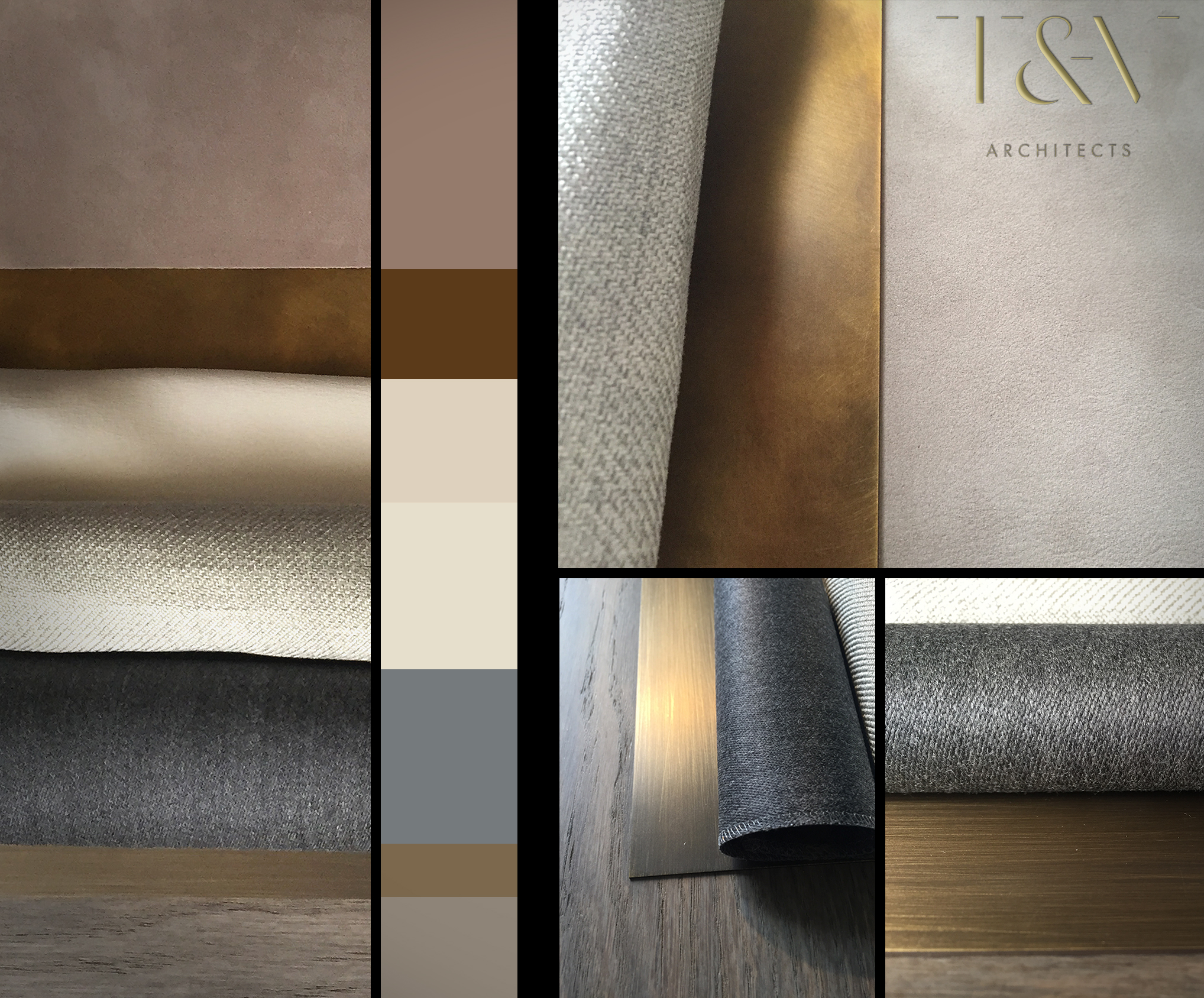
The Material Board: Seeing Every Surface Together Before Anything Is Ordered
The single most useful tool in material selection is a board that shows every surface of a room together, in the room’s actual light conditions, before a single order is placed. Not a digital render, not a mood board assembled from manufacturer photographs, but physical samples — stone, timber, fabric, tile, metal, paint — held against one another in the space they will eventually occupy.
T&V Architects produces detailed material boards for every project. We bring samples to site and review them across the day, in both natural and artificial light, in the specific orientation and aspect of the room. A warm stone that reads beautifully in a south-facing Fulham kitchen can feel cold and grey in a north-facing Islington bathroom. A pale timber that works perfectly in a light-filled loft conversion can disappear entirely in a lower-ground-floor room in Pimlico.
Clients who see their material palette assembled as a whole before committing to it make better decisions, spend their budget more effectively, and arrive at a finished result they will not want to change. That is the purpose of the material board. It is the foundation of every material selection project T&V Architects undertakes in London.

Stone Selection: Natural or Engineered and Why the Difference Matters
The debate between natural and engineered stone is one of the most persistent in London interior design, and one of the most poorly understood. Engineered quartz is consistent, low-maintenance, and available in a wide range of colours. Natural stone — marble, quartzite, travertine, limestone — is variable, requires more considered specification, and offers something that no manufactured product can replicate: geological depth. The veining in a slab of Brazilian quartzite was formed over millions of years. That is visible in the finished surface, and it is what makes a room feel permanent rather than installed.
T&V Architects guides clients through stone selection with the same care we apply to structural decisions. We visit stone yards in person — in London and, for exceptional projects, in Italy and Portugal — to select slabs rather than order from a sample. We advise on which stone types are appropriate for which applications: quartzite for kitchen worktops where durability is paramount, honed marble for bathroom walls where the slightly softer surface adds warmth, travertine for floors where the material’s natural variation anchors a room. For clients who prefer the consistency of engineered stone, we specify products whose quality and visual depth justify their place within an otherwise natural material palette. The choice is always made in the context of the whole room, never in isolation.
Timber: Choosing the Right Wood Species, Tone and Finish for Your Home
Timber is the most forgiving of all interior materials and the most misspecified. The wrong species in the wrong finish in the wrong application can make a room feel either corporate or rustic when it should feel neither. The right timber — chosen for its grain character, its tonal relationship to the other materials in the room, and its appropriateness for the building it will occupy — brings a quality of warmth that no other material produces.
T&V Architects specifies timber with a precision that goes beyond choosing between oak and walnut. We consider grain direction and how it will read across a floor or a joinery panel. We specify finishes — oiled, lacquered, fumed, limed — for how they will perform over time as well as how they look on day one. We select timber grades that suit the character of the building: tighter-grained, more formal selections for Georgian townhouses in Mayfair; more characterful, knotted grades for relaxed family homes in Chiswick or Barnes. Timber floors, wall panelling, joinery, and furniture are all considered within the same material strategy, so that the wood in a room reads as a single considered decision rather than a series of separate purchases made at different times.
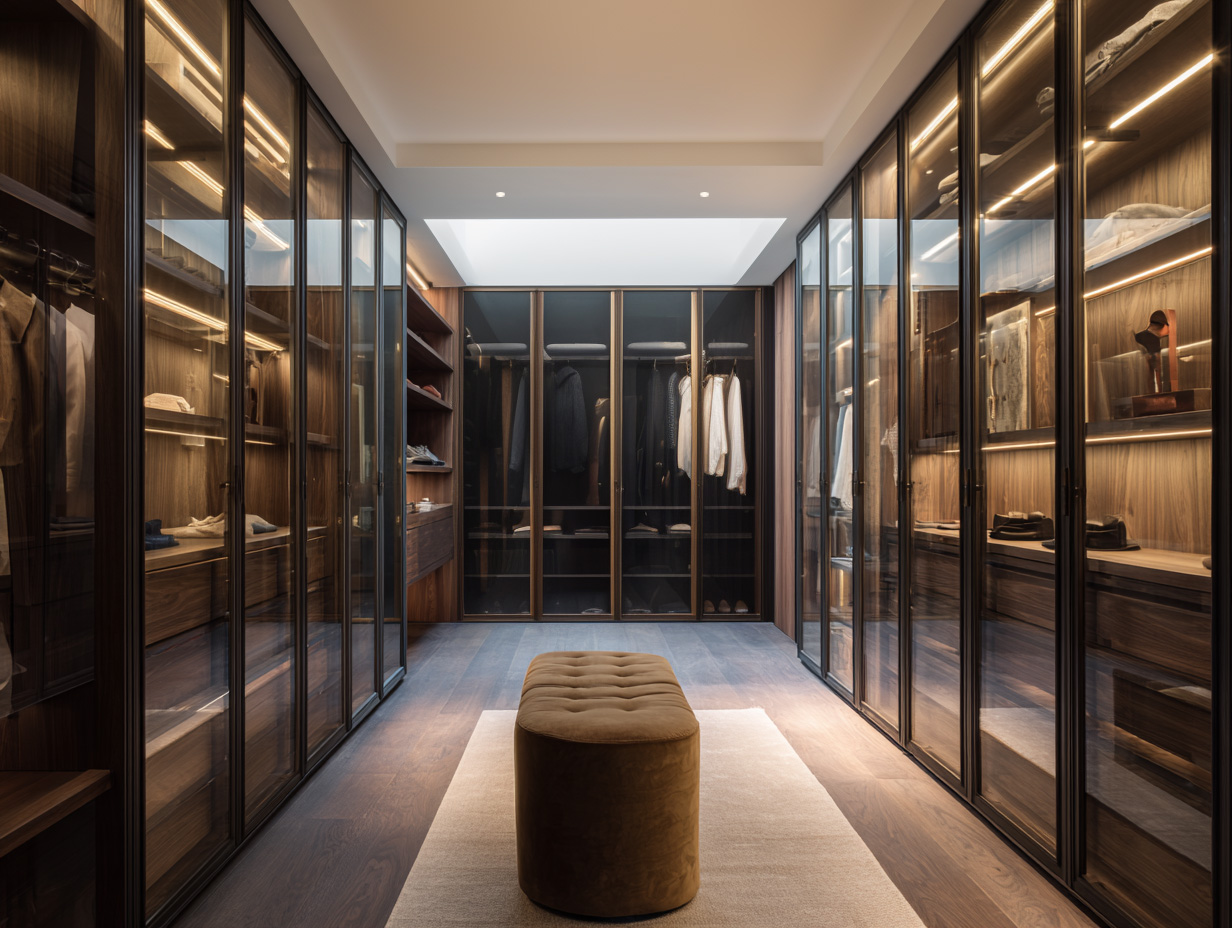
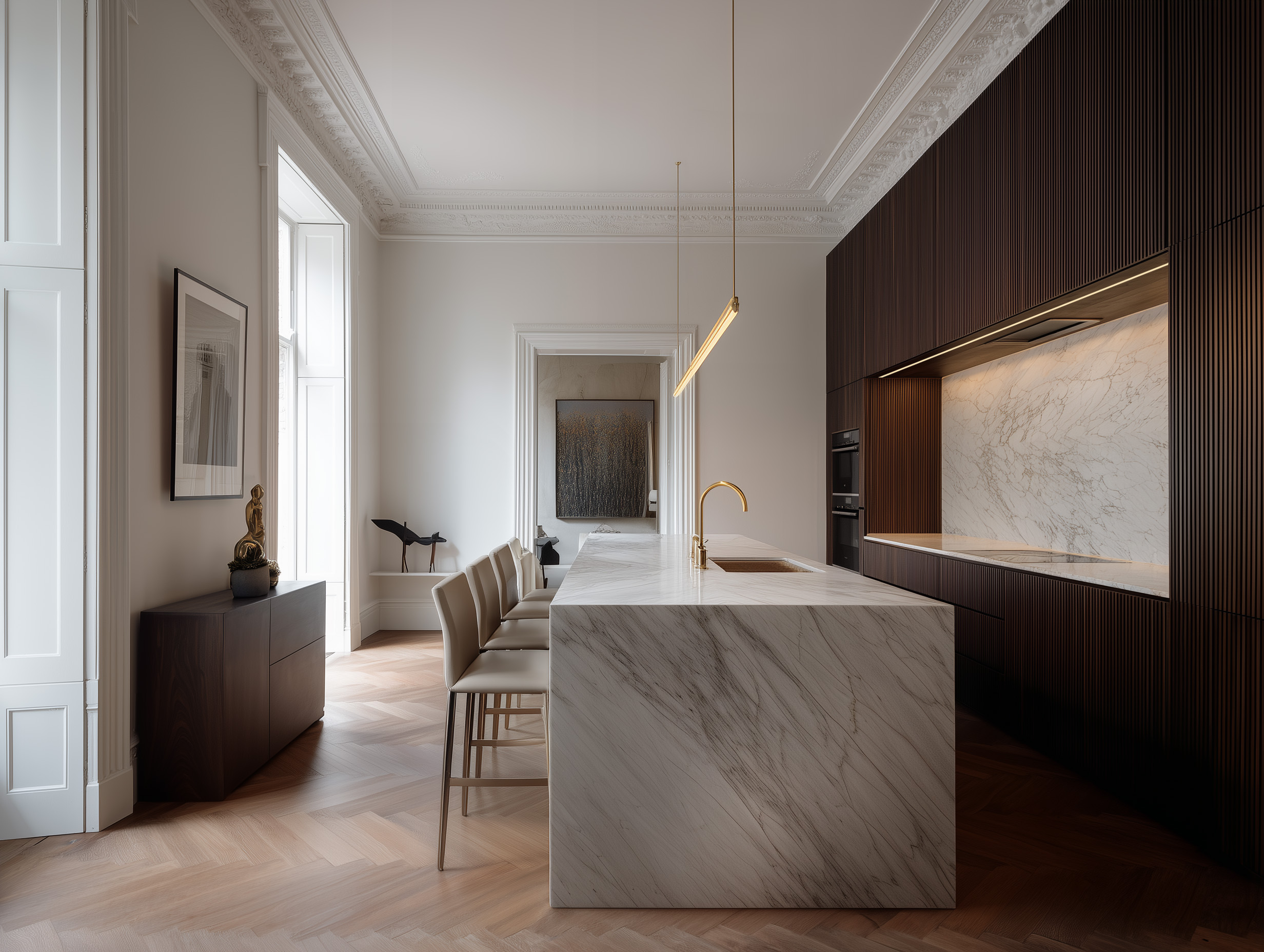
Mixing Materials: Combining Stone, Timber and Metal Without Losing Cohesion
A room furnished entirely in one material feels monotonous. A room furnished in too many feels chaotic. The art of material selection lies in knowing how many materials a room can carry, which combinations create productive tension rather than discord, and how to introduce contrast without losing the sense that everything belongs together.
T&V Architects approaches material mixing as a compositional discipline. We typically work within a palette of three to five primary materials per room — a stone, a timber, a metal finish, and one or two textile elements — and we consider their relationships carefully. Warm stone against cool metal. Dark timber against pale plaster. Rough texture against polished surface. These contrasts give a room depth and interest without producing the visual noise that comes from mixing materials without a governing logic. The key is always the material board. When combinations are assessed together in the actual light of the actual room, decisions that seemed risky in the abstract reveal themselves as exactly right — or exactly wrong — before anything is committed to.
Tactile Surfaces: Fluting, Reeding and Texture as Architectural Detail
Flat surfaces read as backgrounds. Textured surfaces read as architecture. The difference between a kitchen island clad in plain stone and one clad in fluted stone is not merely aesthetic — it is the difference between a surface that the eye passes over and one that the eye engages with. Fluting, reeding, and three-dimensional surface treatments catch light in ways that change across the day, giving a room a quality of animation that flat finishes cannot provide.
T&V Architects specifies tactile surfaces as a considered element of material selection across kitchens, bathrooms, reception rooms, and bedrooms in London homes. Fluted stone on a bathroom vanity. Reeded timber on a kitchen island. Handmade tile with a dimensional glaze on a utility room wall. Limewashed plaster with a pulled texture on a bedroom feature wall. Each of these choices adds a layer of physical presence to a room that photographs rarely capture but that is immediately felt on entering the space.
We source textured materials through our established relationships with specialist suppliers in London, Spain, Portugal, and Italy — including smaller producers whose work is not available through standard retail channels and whose output has the quality of genuine craft rather than industrial manufacture.
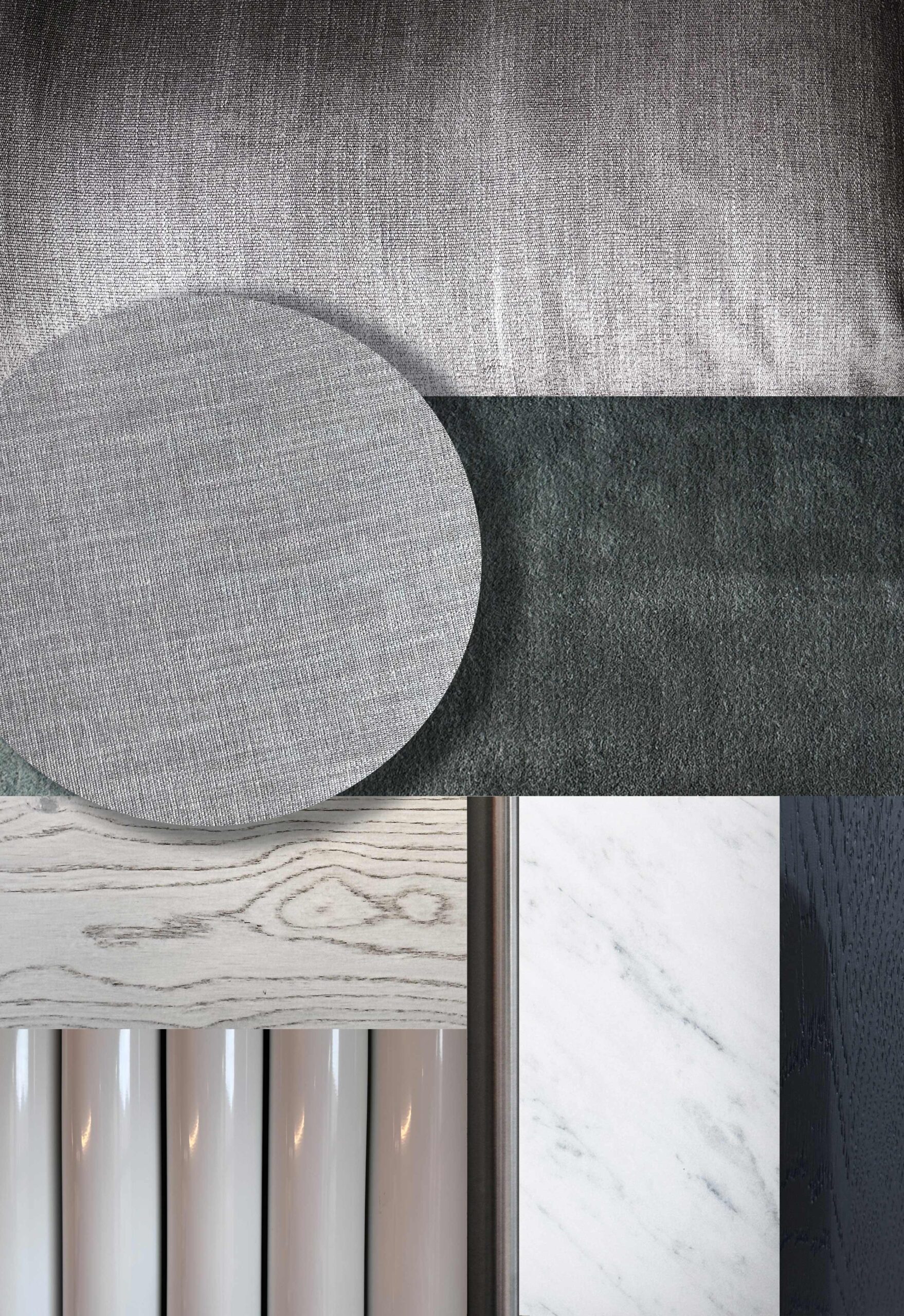
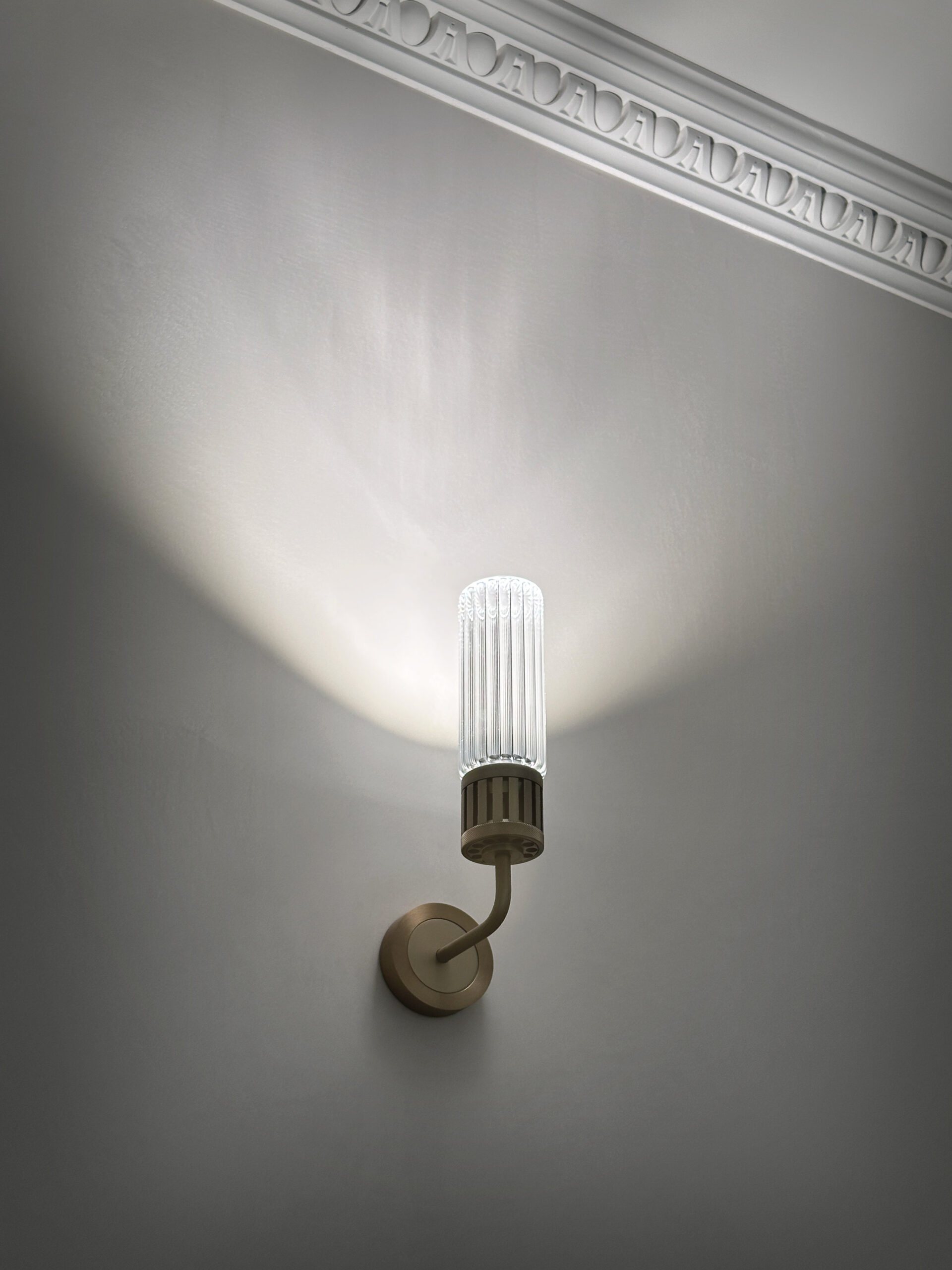
Metal Finishes: Brass, Bronze and Steel Specified to Age Well
Hardware is the punctuation of a room. Handles, taps, light switches, hinges, towel rails — individually small, collectively defining. The wrong metal finish in the wrong context makes a room feel dated within five years. The right metal finish, specified for how it will age rather than how it looks new, becomes part of a room’s character over time.
T&V Architects specifies metal finishes with longevity as the primary criterion. Unlacquered brass develops a warm, varied patina over years of use that no new finish can replicate. Aged bronze sits within period London homes with a confidence that polished chrome never achieves. Brushed steel and blackened iron work in contemporary and industrial contexts where harder, cooler finishes suit the architectural language. We specify a single metal finish throughout a home wherever possible — the same brass in the kitchen, the bathrooms, the joinery hardware, and the light fittings — because consistency of metal finish is one of the simplest and most effective ways of making a home feel considered rather than assembled. Where two metals must coexist, we specify them with care for how their tones relate, avoiding combinations that compete rather than complement.
Healthy Homes: Sustainable Materials With Low VOC Emissions Specified as Standard
The materials inside a home affect the air quality within it. Paints, adhesives, sealants, timber finishes, and some composite materials can release volatile organic compounds — VOCs — into the indoor environment for months or years after installation. In a well-insulated London home with limited ventilation, these emissions accumulate. For families with young children, or clients with sensitivities, the health implications are real and worth addressing at the specification stage.
T&V Architects specifies low-VOC and zero-VOC materials as standard across all residential interior design projects in London. We select natural paint ranges whose formulations are free of harmful emissions. We specify timber finishes — hardwax oils, natural lacquers, water-based coatings — that perform to the same standard as conventional finishes without the off-gassing. We use natural stone, solid timber, and handmade ceramic tile in preference to composite materials whose binders and adhesives carry higher emission profiles. Responsible material selection is not a constraint on design quality. The materials we specify for their low emission profiles — natural stone, solid timber, mineral paints, natural textiles — are also the materials that age most beautifully and perform most durably over time. Health and quality, in our experience, point in the same direction.

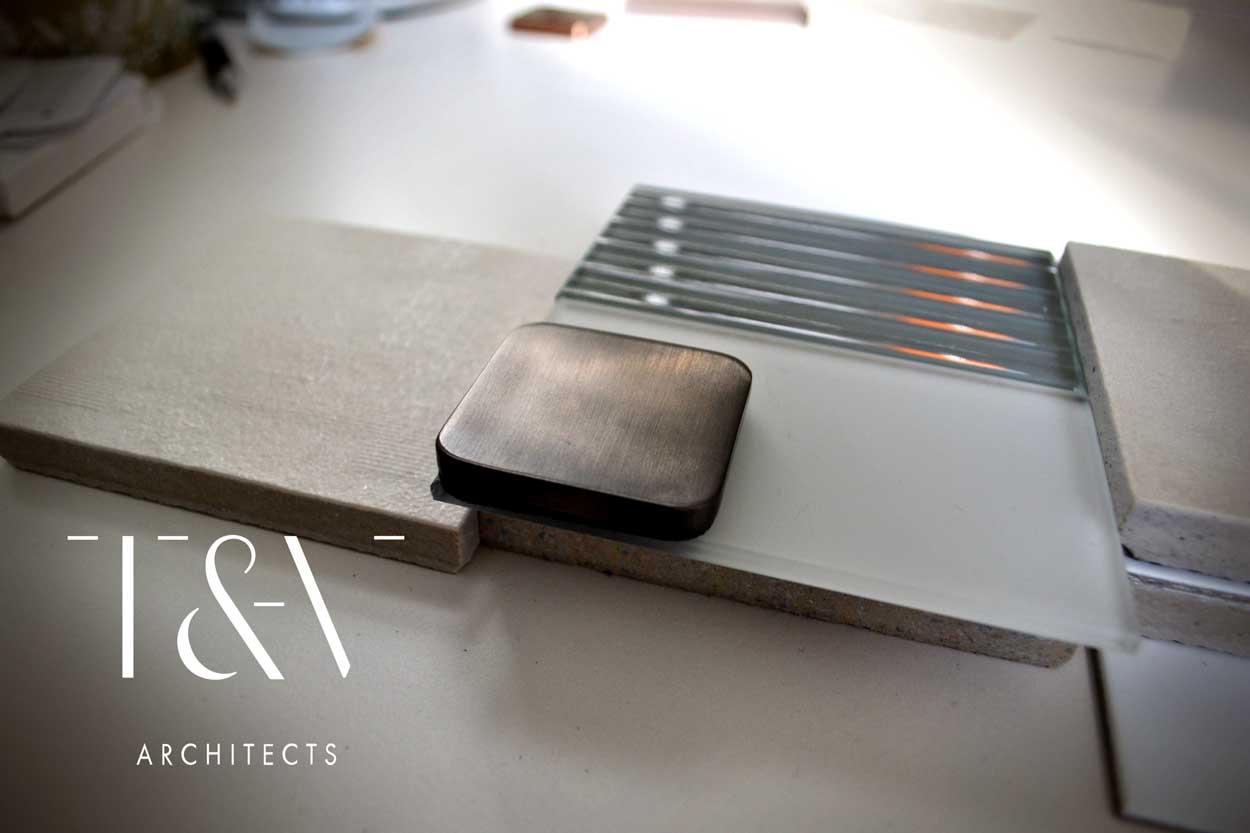
The Material Library: Over 1,000 Samples Hand-Picked by Our Directors, Available to Every Client
Most architectural practices rely on manufacturer sample boxes and supplier catalogues. T&V Architects has spent years building something different: an in-house material library of over 1,000 samples, assembled through years of travel, supplier visits, and direct relationships with makers across Britain, Italy, Spain, Portugal, Scandinavia, and beyond. Every sample in the library has been personally selected by our directors — not because it was sent to us, but because we sought it out.
The library includes natural stones in cuts and finishes not available through standard London suppliers. Timber samples from small sawmills whose output is genuinely distinctive. Hardware from independent metalworkers whose pieces are made in limited quantities. Ceramic and encaustic tiles from family-run workshops in Andalusia and Tuscany. Fabric samples from weavers who produce to order in small runs. Paint colours from natural mineral ranges that produce a depth of finish unavailable from commercial manufacturers.
When a client sits with T&V Architects to discuss material selection in London, they are not choosing from what is easy to obtain. They are choosing from what our directors believe to be the best of what exists. That is a library that has taken over a decade to build, and it is available to every client we work with from the first consultation.
Glass as Architecture: Fluted, Smoked and Tinted Glazing That Shapes a Space
Glass is one of the most versatile and underused materials in residential interior design. Plain transparent glazing performs a single function: it lets light through while maintaining a visual connection. Textured, tinted, and treated glass does something more interesting — it controls the quality of light, modulates visibility, defines zones within open-plan spaces, and adds a layer of material richness that plain glass cannot provide.
T&V Architects specifies glass as an active architectural material across residential projects in London. Fluted glass in internal doors and cabinetry that admits light while diffusing views. Smoked and bronze-tinted glazing in screens and partitions that creates depth and warmth in rooms that receive strong direct sunlight. Reeded glass in bathroom enclosures that provides privacy without heaviness. Antique mirror glass in joinery and wall panels that reflects light and adds the particular quality of aged silver that new mirror never achieves.
Glass selection happens within the broader material strategy for a room — considered for how it will interact with the stone, timber, and metal finishes around it, and for how it will behave across different light conditions and times of day.
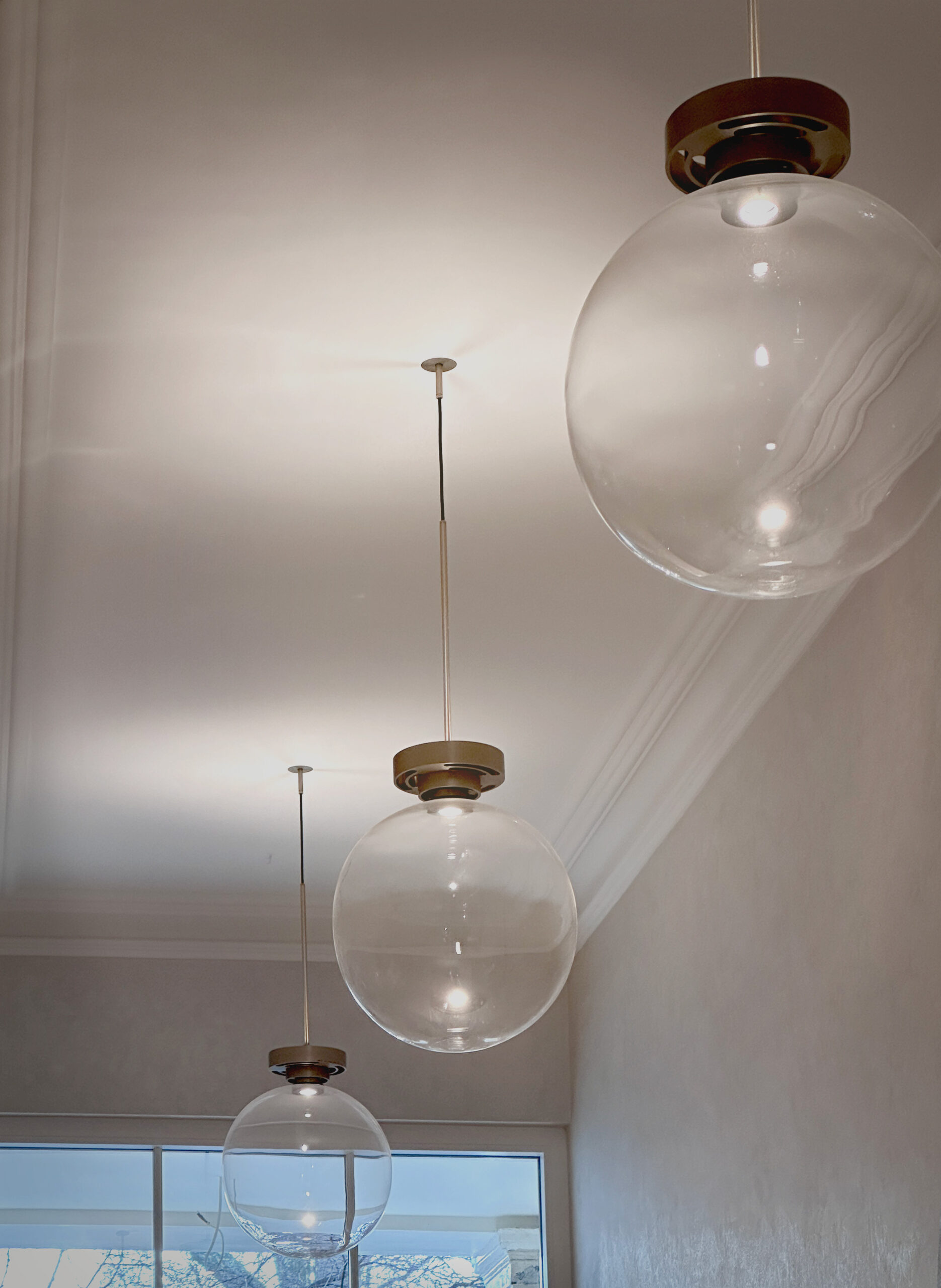
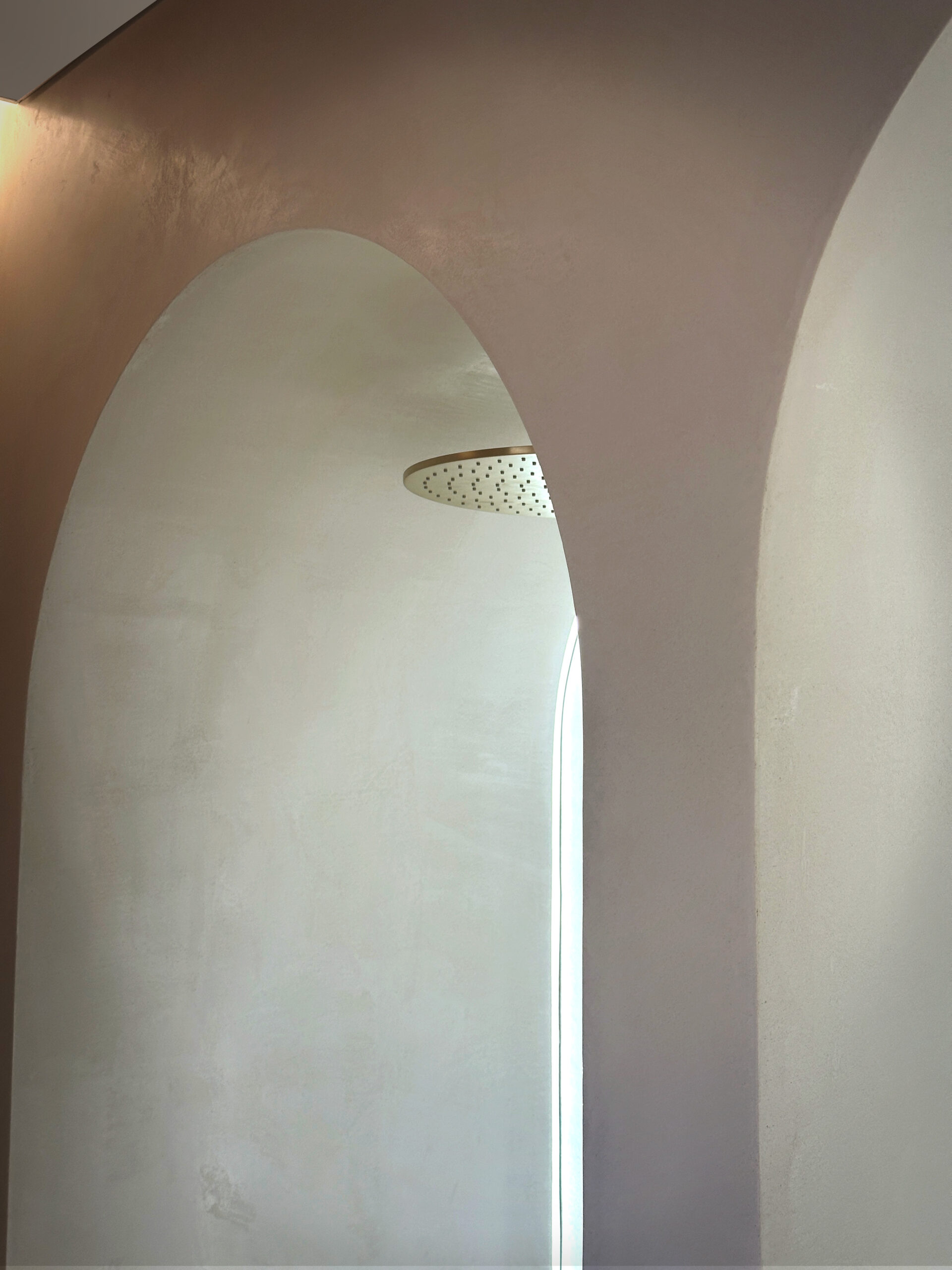
Decorative Paint: Venetian Plaster, Limewash and Specialist Finishes That No Flat Paint Can Replicate
Flat emulsion paint is a background. Venetian plaster, limewash, mineral paint, and specialist decorative finishes are surfaces — active, three-dimensional, light-responsive materials that transform a wall from a container into an architectural element. The difference, in a room, is immediate and impossible to replicate with conventional paint regardless of colour choice or application quality.
T&V Architects specifies decorative paint finishes as a core element of material selection across London residential projects. Venetian plaster — applied in multiple layers, burnished to a depth that suggests stone rather than paint — in drawing rooms and primary bedrooms where the quality of the wall finish defines the room’s character. Limewash in its contemporary form, pulled and varied in application to create a surface that shifts between warm and cool as the light changes across the day. Mineral silicate paints on feature walls and bathroom surfaces where the crystalline bond between paint and substrate produces a finish of extraordinary durability and depth.
These finishes require skilled applicators, and T&V Architects works with a small number of specialist decorators in London whose standard of work matches the quality of the materials themselves. The result is walls that are as carefully considered as every other surface in the room — and that contribute to the finished interior with a presence that flat paint simply cannot achieve.
Material Selection in London: The T&V Architects Approach
Every surface in a home is a decision. Made well, those decisions accumulate into rooms that feel completely resolved — where nothing jars, nothing dates, and everything contributes to a whole that is greater than the sum of its parts. Made poorly, they produce spaces that are expensive but unsatisfying, furnished but never quite finished.
T&V Architects brings over a decade of material expertise, an in-house library of over 1,000 hand-picked samples, and a rigorous architectural approach to every material selection project in London. Whether the project is a single bathroom in a Knightsbridge flat or the complete material specification of a Mayfair townhouse, the approach is the same: every surface considered together, every decision made in the context of the whole.
T&V Architects is based at 18 St George’s Drive, London SW1V 4BL. To discuss a material selection project, contact us on +44 (0)20 7931 9620 or book a consultation through our website.